


5 practical CBT communication tools to break relationship stalemates (before conflict escalates)

Lisa Meyer • September 18, 2026

Share this article

When you find yourself replaying the exact same argument on a Tuesday evening that you had six months ago, you are most likely caught in a reactive cognitive loop. For couples navigating high-demand careers, busy family schedules, and shifting life priorities in North Georgia, relationship friction rarely stems from a lack of commitment. Rather, it's the result of unexamined emotional scripts and unhelpful communication habits.


In this guide, you'll learn how seeking professional
marriage counseling equips you with 5 practical CBT tools to break destructive argument patterns, de-escalate tension before it turns into resentment, and restore meaningful emotional connection with your partner.

The anatomy of a relationship stalemate—why communication breaks down

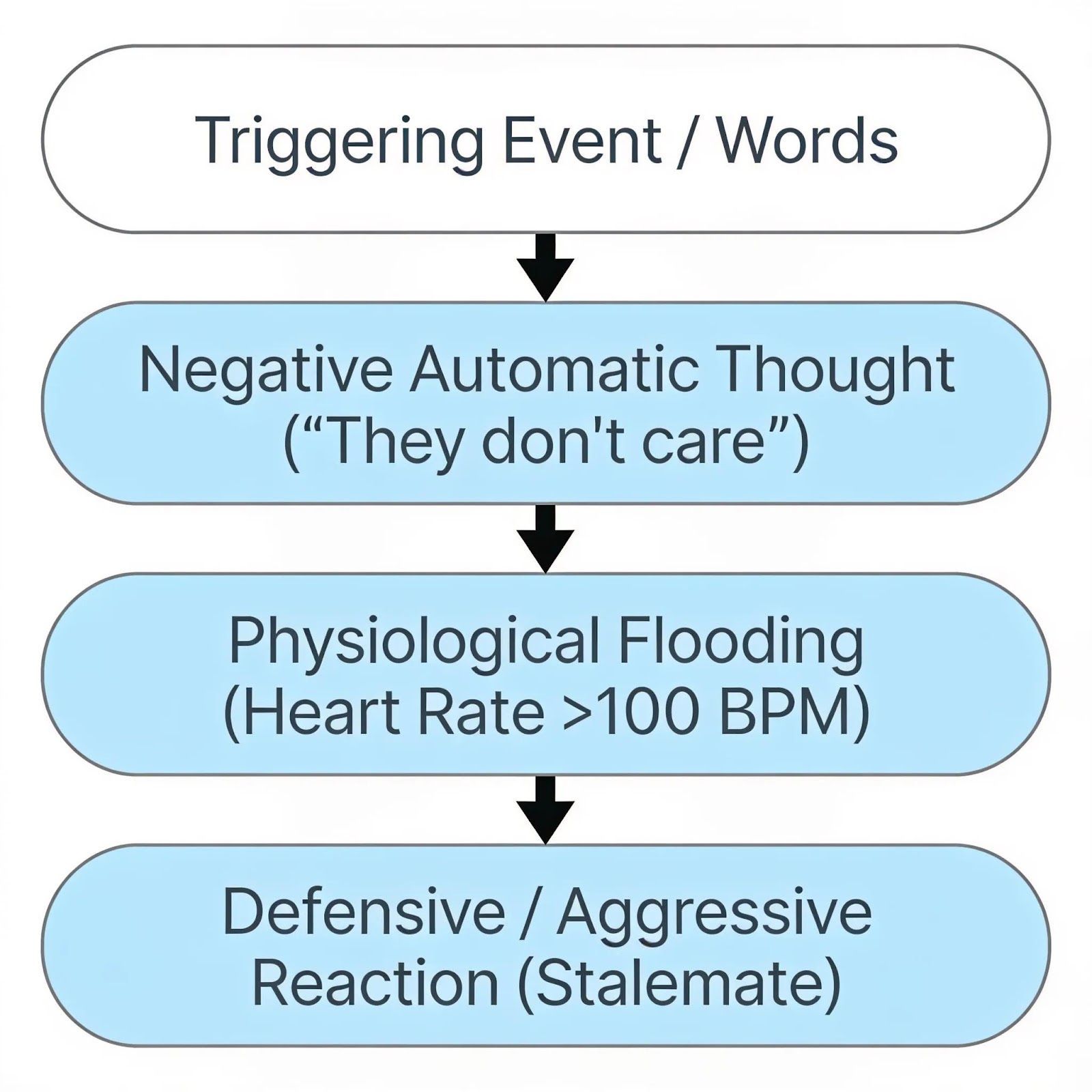
Relationship stalemates happen when emotional stress and quick assumptions kick in, leaving partners reacting to each other's defensiveness instead of tackling the core issue.

During heated arguments, your body's stress system, led by the amygdala, triggers a fight-or-flight response. Research from the American Psychological Association (APA) shows that Cognitive Behavioral Therapy (CBT) offers practical ways to catch these automatic stress reactions early and build healthier conversation habits.

In everyday marriage dynamics, three common habits often keep arguments going:

  1. Mind reading: Assuming you know your partner’s intent without asking.
  2. Worst-case thinking: Treating one missed task as a sign the whole partnership is failing.
  3. All-or-nothing thinking: Describing your partner as "always" or "never" doing something.


Recognizing these patterns as fixable habits—not permanent personality traits—lets you use structured CBT tools to stop the cycle and protect your connection.

Tool 1—The Meyer Counseling Speaker-Listener Protocol

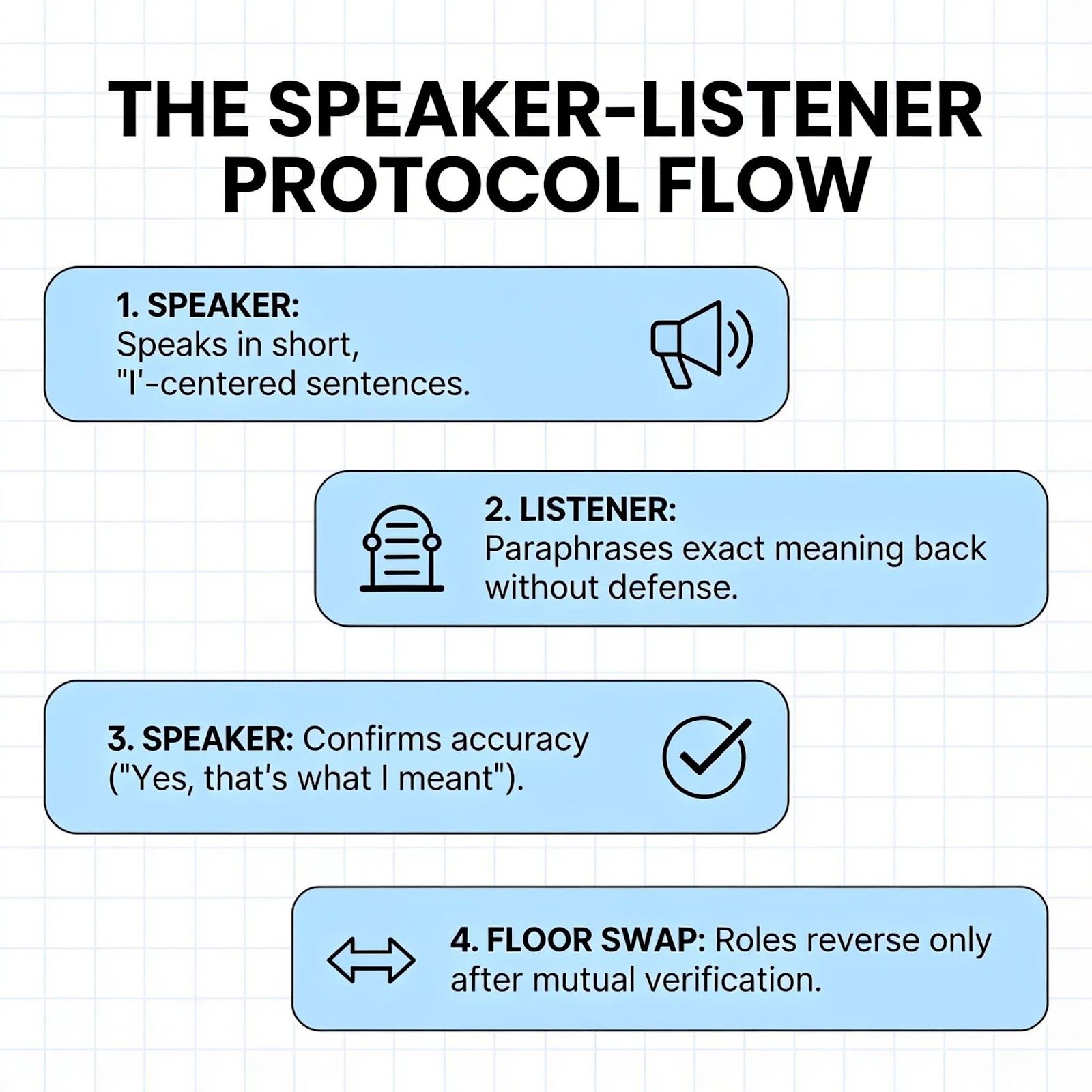
The Meyer Counseling Speaker-Listener Protocol helps partners slow down conversations, pause interruptions, and verify what was said before answering.

Most arguments drag on because partners plan their rebuttal while the other person is still talking. The Meyer Counseling Speaker-Listener Protocol sets clear turn-taking rules so only one person holds the floor at a time.


Speaker-Listener Rules
Role Rules of engagement Common pitfalls to avoid
The Speaker Focus on your own feelings using "I" statements. Keep points to 2–3 sentences. Blaming ("You always ignore me"), giving speeches, or bringing up old fights.
The Listener Rephrase what you heard in your own words. Focus on understanding their perspective. Interrupting, jumping to advice, rolling eyes, or making excuses.

How to implement it at home

When discussing sensitive topics like finances, parenting, or household routines, pass an object (like a notepad or mug) to mark who has the floor. The listener starts with, "What I hear you saying is..." Swap roles only after the speaker agrees the summary is accurate.

Tool 2—The 10-Minute Cognitive Timeout Rule

The 10-Minute Cognitive Timeout Rule sets a clear pause when heart rates spike above 100 beats per minute, helping couples cool down before arguments get out of hand.

When emotional stress spikes, your body's clear-thinking centers slow down. Trying to work through a tough topic while flooded leads to regretful words and hurt feelings.

According to biomedical research archived by the National Institutes of Health (NIH), an acute stress response triggers an immediate spike in adrenaline, which subsides within minutes, followed by a surge in cortisol that peaks 20 to 30 minutes later and can take one to two hours to fully return to baseline levels.

Step-by-step timeout execution

  1. Agree on a signal: Pick a simple phrase or hand sign ahead of time (like "Let's take 10").
  2. Set a return time: Always state when you'll come back. For example: "I'm feeling overwhelmed. I need a 10-minute break to clear my head, and I'll meet you back here at 7:30 PM."
  3. Focus on calming down: Avoid replaying the argument in your head. Walk outside, take slow breaths, or listen to music.
  4. Re-group as planned: Meet back at the agreed time. If either of you still feels tense, add another short pause.


Tool 3—Automatic Thought Reframing for Spousal Triggers

Automatic Thought Reframing helps you notice quick, negative assumptions about your spouse and replace them with calm, realistic explanations.

CBT shows that situations don't cause frustration on their own—your interpretation shapes how you feel. When dishes stay in the sink, resentment often comes from the thought, "They don't respect my time."

Reframing these quick thoughts removes extra tension from everyday moments:

CBT Reframing Perspectives
Situation Quick assumption Reframed CBT perspective
My partner is quiet after work. "They're upset with me or pulling away." "They had a long workday in Alpharetta and needed 15 minutes to unwind."
The partner forgets a chore. "I can't count on them." "They had a busy day; this was an honest mistake, not a lack of care."
My partner is too tired for intimacy. "They aren't interested in me." "They're exhausted from a long work week; let's relax together on the couch instead."

Tool 4—Structured "I-Statement" Needs Framing

Structured "I-Statement" Needs Framing turns complaints into clear, practical requests that make it easier for your partner to listen.

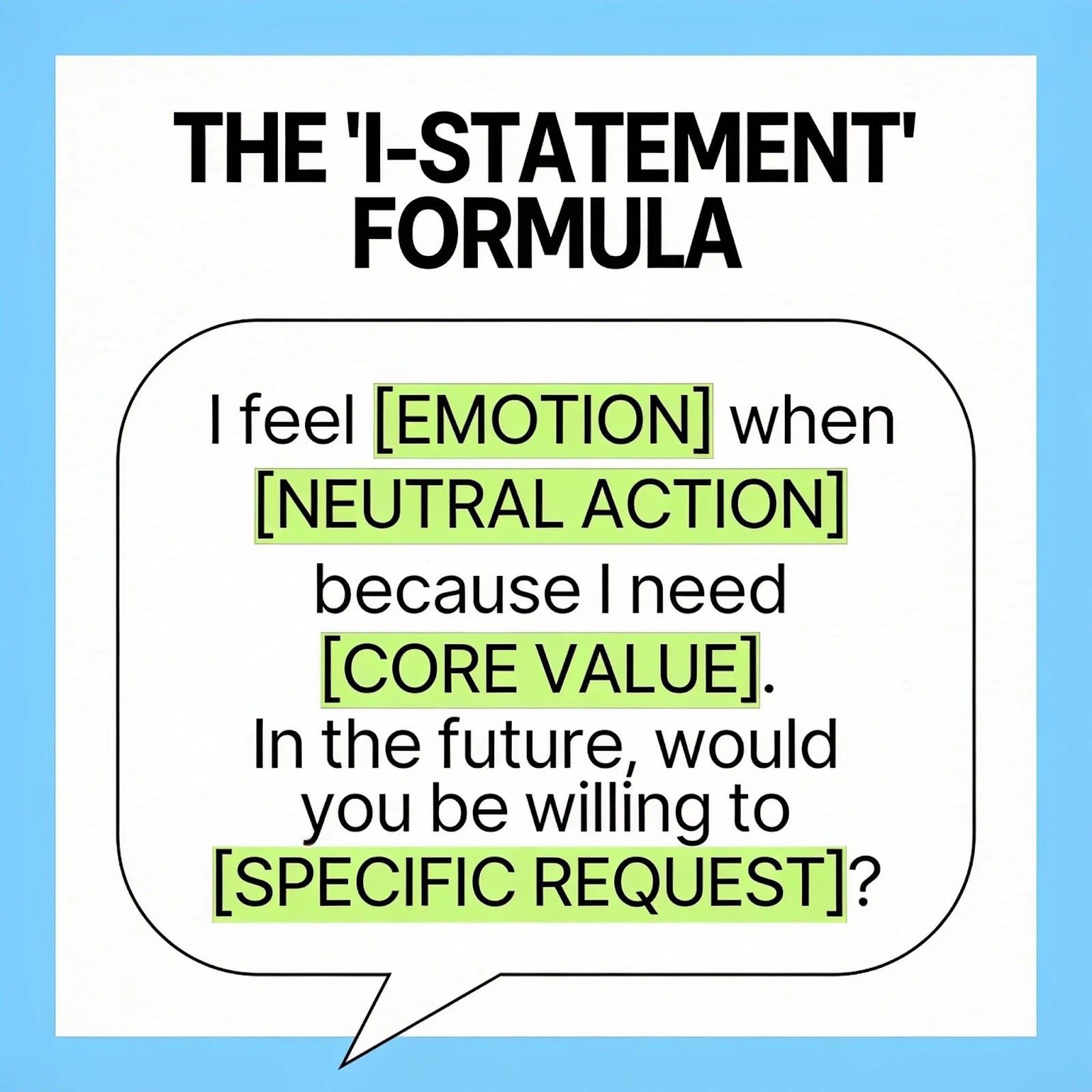
Starting a sentence with "You" ("You never help out") puts your partner on the defensive, leading to counter-arguments ("Well, you're always on your phone"). Using a simple three-part sentence breaks this pattern:

Contrast in action

  • ❌ Old complaint style: "You're always late picking up the kids in Cumming, and it messes up my whole afternoon!"
  • 100% Pragmatic CBT reframe: "I feel stressed when plans change suddenly because I need a predictable schedule. Moving forward, could you text me 30 minutes ahead if work runs late?"

Focusing on a specific action rather than pointing fingers gives your partner a clear way to support you.

Tool 5—The Daily 15-Minute Connection Audit

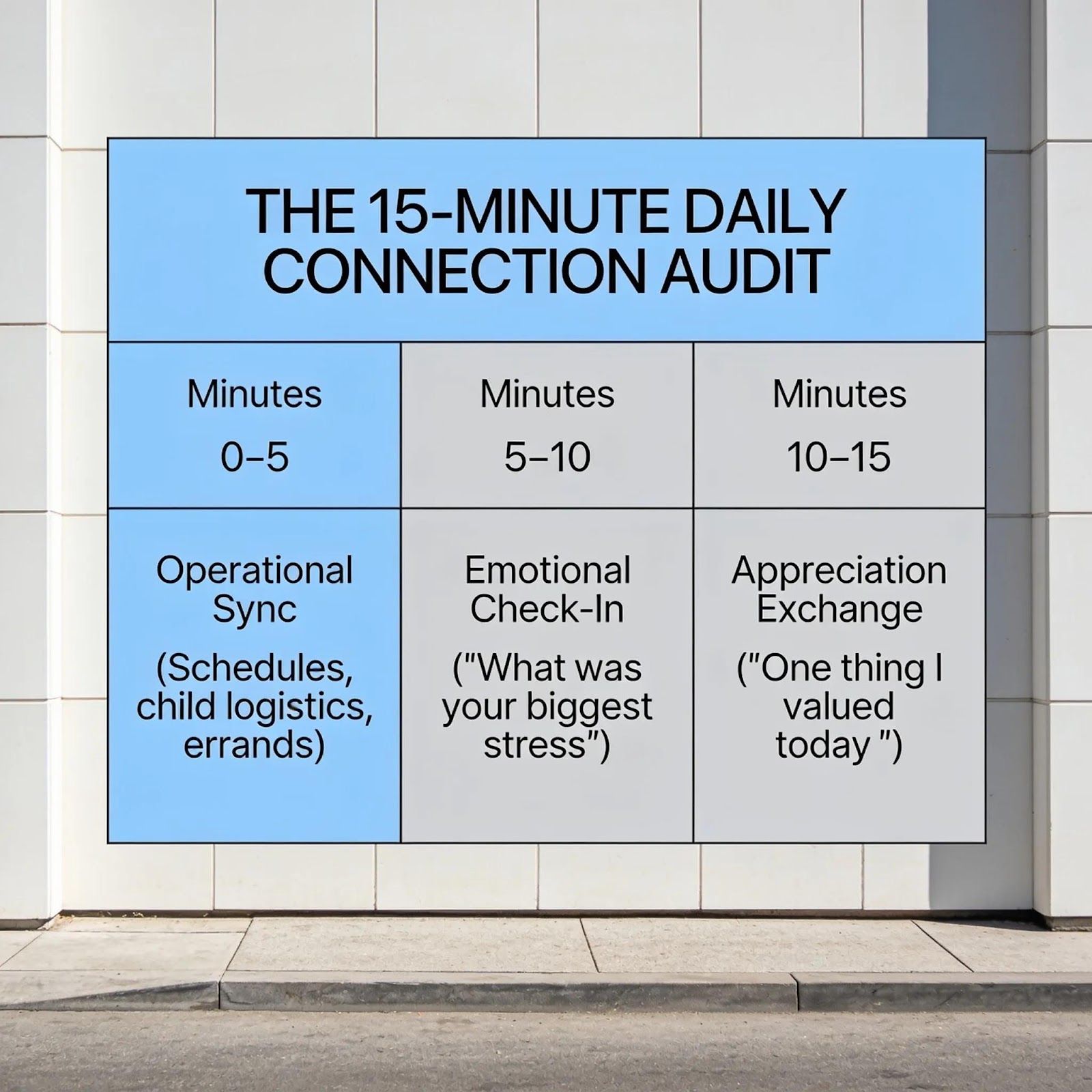
The Daily 15-Minute Connection Audit gives couples a simple daily routine to talk through logistics, check in on feelings, and stay close.

Distance in marriage grows gradually through small missed moments during busy weeks. Couples managing careers, family schedules, and commute stress can easily fall into running the household like co-workers rather than partners.

Routine guidelines

Put phones away, turn off the TV, and sit together. Keep a scheduled talk under 5 minutes so you preserve the rest of the time to listen and appreciate each other.

Beyond self-help—when to upgrade to marriage counseling mini-intensives

When daily self-help tools aren't enough to break long-standing argument loops, guided professional therapy helps couples make faster progress.

Self-guided tools are great for daily upkeep, but couples dealing with deep-seated distance, trust rebuilding, or stubborn conflict patterns benefit from an experienced therapist. Working with a skilled counselor gives you an objective guide to spot hidden friction points, restore trust, and adapt CBT tools for your marriage. You can explore our marriage and couples counseling services to see how structured therapy supports lasting change.

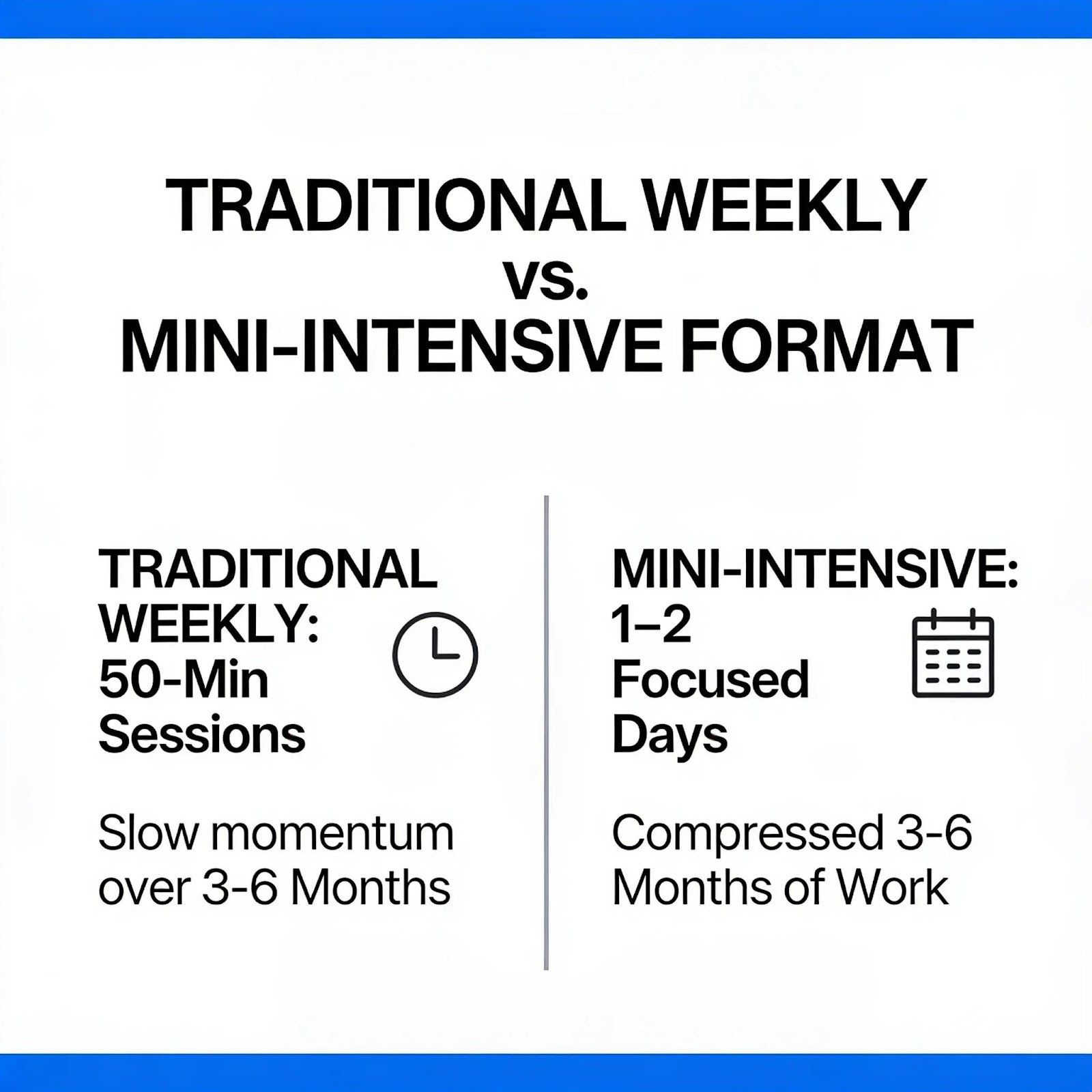
For busy couples in Cumming, Alpharetta, Suwanee, and Milton who find weekly 50-minute appointments hard to fit into busy calendars, Marriage Counseling Mini-Intensives offer focused 1- or 2-day therapy sessions. This format gives you dedicated time away from daily distractions to work through core issues in a single weekend.

Conclusion—rebuilding your partnership through actionable tools

Breaking an argument loop doesn't require huge romantic gestures or waiting for your partner to act first. It starts with simple choices: choosing practical communication steps, managing stress in heated moments, and replacing default reactions with clear tools. Practicing the Speaker-Listener Protocol, taking timely breaks, and reframing quick assumptions helps build steady trust over time.

If you're ready to move past repeating arguments and want direct, supportive guidance tailored to your relationship, booking a session is simple and confidential.

Take the next pragmatic step for your marriage: You can schedule a consultation intake within 48 hours with Lisa Meyer, M.A., LPC, at Meyer Counseling & Consulting today, or call (770) 781-3793 to learn how CBT tools and marriage mini-intensives help couples create lasting change.

About the Author

Lisa Meyer, M.A., LPC is a Licensed Professional Counselor and founder of Meyer Counseling & Consulting in Cumming, Georgia (2450 Atlanta Highway, Suite 1701). With over 20 years of counseling experience in North Georgia, Lisa specializes in solution-focused couples therapy, marriage mini-intensives, anxiety management, and executive coaching. Her approach, The Pragmatic Path, combines practical Cognitive Behavioral Therapy (CBT) with real-world tools that help couples achieve meaningful progress in 3 to 5 sessions.

Recent Posts

By Lisa Meyer August 20, 2026
Stop feeling like roommates this school year. Discover 3 practical CBT tools from a licensed Cumming, GA marriage counselor to protect your relationship.

Three people in a counseling session, seated in a bright living room with a small table and plant.
By Lisa Meyer July 29, 2026
Nervous about your first session? This comprehensive guide explains exactly what to expect during your initial marriage counseling appointment with Lisa Meyer.

Two people sit on a porch in plaid jackets, looking out at a warm sunset.
By Lisa Meyer June 25, 2026
Is your marriage facing challenges? Learn the 7 signs that indicate you might need counseling. Take the first step toward a healthier relationship today!

By Lisa Meyer May 6, 2026
Wondering if marriage therapy is effective? Explore success rates, research-backed outcomes, and what to expect from marriage counseling in Cumming, GA.

Cozy home office with desk, chair, large window, beige sofa, plants, and ceiling fan
By Lisa Meyer April 21, 2026
Rebuild trust after infidelity with effective strategies and counseling. Learn to heal and restore your marriage with expert guidance and support.

By Lisa Meyer March 16, 2026
Most couples spend more time choosing a restaurant for date night than they do evaluating a therapist. You feel desperate, you find someone with decent reviews, confirm they are taking new clients, and book the first available slot. Three sessions in, you realize their approach doesn't match what your relationship actually needs, and starting over feels exhausting. If you're exploring couples counseling in Cumming, GA, or anywhere in North Georgia, these 8 questions can save you weeks of wasted time and help you find the right fit from day one. A good couples therapist will welcome every one of these questions without hesitation. Asking them isn't awkward, rather you are being an informed consumer. Moreover, how a therapist responds tells you almost as much as what they actually say.

By Lisa Meyer February 23, 2026
Choosing a couples therapist is one of the most important decisions you and your partner will make for your relationship. Unfortunately, most couples, feeling the need for immediate help and solutions, often jump into the search the wrong way, costing them time, money, and delayed progress before they even realize that the client-therapist fit was incompatible. If you're looking for couples counseling in Cumming, GA, avoiding these common mistakes could mean the difference between real, lasting change and spinning your wheels, delaying healing, and relationship gains.  The good news? Once you know what to look for, delays and setbacks are largely avoidable. Here's real-life guidance on how to find a therapist who will help you begin the transformative process of improving communication, restoring your relationship, and taking your marriage to the next level.

By Lisa Meyer December 29, 2025
Instead of Adding More Goals This Year…Release What’s Holding You Back

Snowy path through a forest at sunrise with text
By Lisa Meyer December 22, 2025
Embrace the "December exhale" and rediscover hope this Christmas. Find inspiration to rise above chaos, nurture your dreams, and prepare for a fresh start in 2026.
By Lisa Meyer December 11, 2025
The cool, dry air of December, Christmas lights lining streets and homes, greenery and bows on every doorway, mankind being a little more patient, and children a little more joyful — all are inescapable indicators that the Christmas season is upon us. As we gather with friends and family over the next month, not all gatherings are ones we look forward to. None of our families depict the images curated by Currier and Ives or Hallmark movies. Most family Christmases are a little more like National Lampoon’s Christmas Vacation. (Hah!) Families can be messy — and most have a few sticky spots. While most people genuinely love their families, even loving families can be a tad bit messy. Balancing this with a spouse and their side of the family — and all that entails — can feel daunting. Usually, your spouse’s family, respectfully and playfully, has a whole different brand of “crazy” than yours!  Below are a few strategies for navigating three of the most common holiday dilemmas around “where we spend Christmas” and how to approach it:

Show More